Wednesday, 16 March 2011

World like a dewdrop............

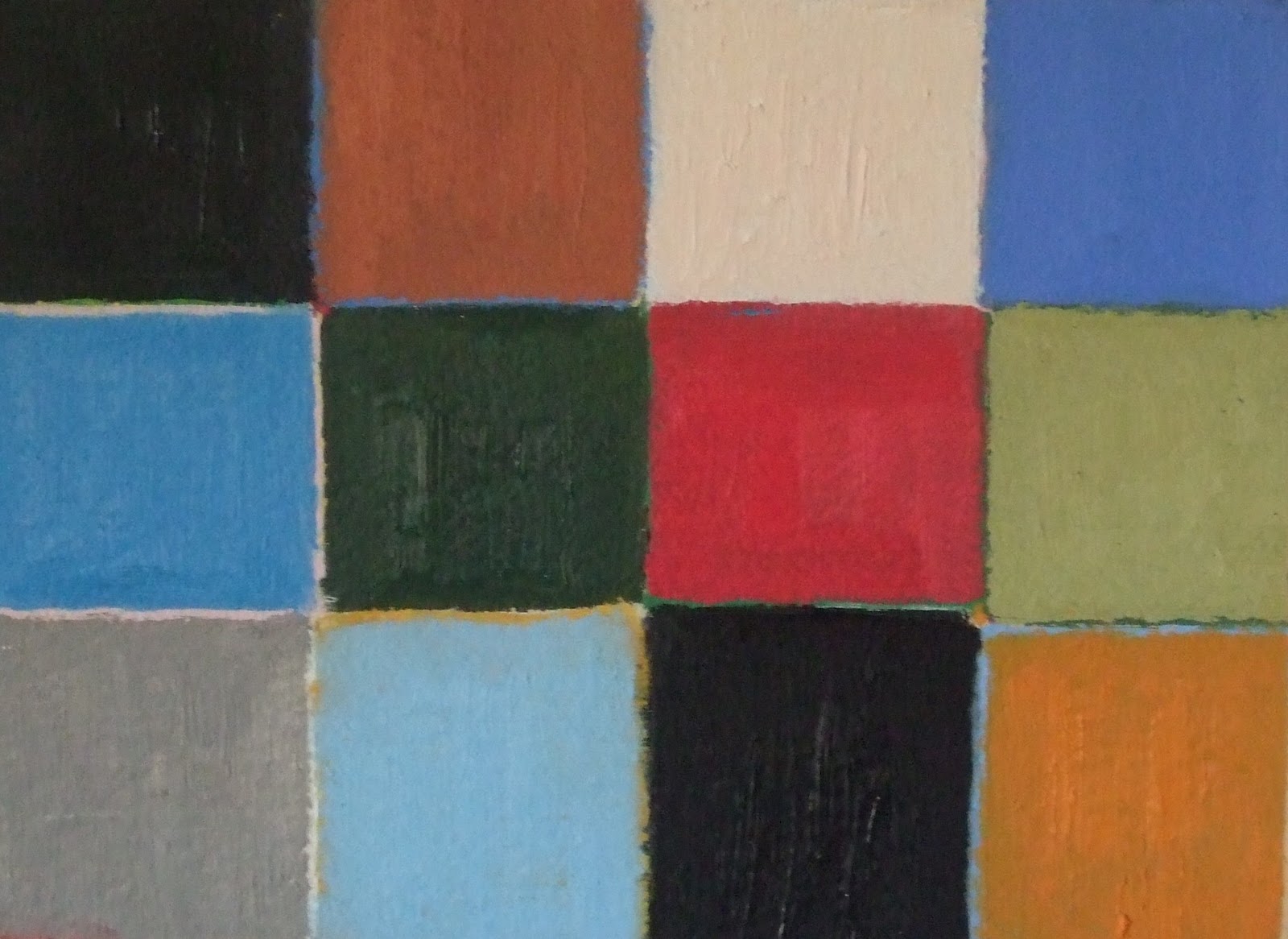
World like a dewdrop    Acrylic on canvas    122x76cm     Tom Cullen 2011

"World like a dewdrop
Though it's only a dewdrop
Even so,even so."
                                                                          Issa
                                         I painted "World like a dewdrop" recently in 2011, having read and been influenced by  Japanese haiku poetry. I wanted to explore and interpret some of the principles of haiku in a visual way and through my own language of abstract expressionism.The question of scale interested me. I wanted to develop a relationship between a small entity in the painting and the larger expanse of the canvas itself,using vibrant colour to dictate both harmony and contrast.
                                Haiku poetry emerged in Japan in the 16th century and has it's roots in  the tradition of Tanga and the developments of Renga.In original format,it consists of three lines of five,seven and five syllables respectively.There are nine haiku rules, which include stating that the poem should be simple and immediate. It should also have connections with real events, sights, sounds or emotions.Another technique used is the contrast between the large and the small, the cosmic and the individual or the profound and the everyday.By comparing the world to a dewdrop for instance, we are forced to change perspective.This may alter our pre-conceived ideas and meanings about our relationship with the world.
                              There are also links with the Zen Buddhist concepts of Change and Impermanence,Suffering and Compassion,Simplicity and Momentariness,Non-self. Everything is in constant state of change and suffering is key to human existence. Compassion for ourselves and others is essential to combat pain.By learning to live with a little ,keeping life simple and by trying to live in the moment we can also come to terms with the human condition.Ultimately,the idea of a permanent self and ownership is an illusion.

                            "World like a dewdrop" is on show at the W3 Gallery, Acton Town,London from June 5th as part of the "Celebrating Sanctuary" Exhibition.


Sunday, 13 February 2011

Essaouira

 Essaouira   Acrylic & Oil On Canvas  43x153cm      Tom Cullen

                                       Essaouira,the north Moroccan fishing village is renowned for it's narrow streets, multi-colour doors and tall stucco-coloured houses.Situated on the Atlantic coast,the water is cold,the waves vibrant and yes,it can be quite windy.The light however, is fantastic and it is not surprising that it is a popular place among artists.Many of them now live and have galleries there. From the mid 60's  it became a haunt for musicians like Jimi Hendrix and later Bob Marley to chill out and find inspiration. Nowadays,the annual Gnaoua (African Sufi) music festival is just part of the special magic of Essaouira.
                                       I visited  Morocco in 2007 and painted "Essaouira" shortly afterwards.I wanted to avoid any linear convention or symmetry in this painting,allowing the colour to take charge of the balance. I used acrylic to create the flat pale grey-blue background and I took advantage of the vibrancy of the oil paint to convey a sense of light and dazzle.Pushing everything back to basics,hopefully we are left with something that evokes some of the spirit of Essaouira - this bright, beautiful,colourful,and creative place in Morocco, North Africa.


Saturday, 29 January 2011

The Dead


Detail from "The Dead"  Tom Cullen   Oil on Canvas 2007

                            "The Dead" is a short story written by James Joyce as part of the "Dubliners" collection published in 1914. It is the last story in the book and unites the previous themes covered in the collection. The intention in writing Dubliners, Joyce said was that the city of Dublin seemed to him the centre of paralysis. By this, Joyce meant the inability to act, move or grow beyond where one is spiritually and emotionally alive - the inability to live fully.Considered one of the most beautifully executed stories in the English language, "The Dead" was the culmination of Joyce's critical and ironic portraits of everyday life in the turn of the century Dublin.
                             I wanted to interpret this short story in a way in which the American abstract artist Mark Rothko might have done, but also using my own expression and particularly giving attention to the last emotional lines.In this,the central character Gabriel reflecting on his wife Gretta's tragic love, suggests that the living might in fact be able to free themselves to live unfettered by deadening routines and the past. In every corner of Ireland, snow touches both the dead and the living uniting them. The painter Rothko, tragically commited suicide in 1970 whilst nine of the famous Seagram murals were being transported to the Tate gallery in London. The film "The Dead" was the also the last film which John Huston directed, released posthumously in 1987.

Wednesday, 19 January 2011

Bacchus and Ariadne

                                Bacchus and Ariadne                Tom Cullen        Oil on paper. 2008.   

"Bacchus and Ariadne" is a contemporary interpretation of the painting by Titian which hangs in the National Gallery,London. According to the classical writers Ovid and Catulius, Bacchus,the god of wine emerged with his followers and falling in love with Ariadne on sight, leaped from his chariot towards her.She had been abandoned on the Greek island of Naxo by Thebes.Titian's painting shows her initial fear of Bacchus,but he raises her to heaven and turns her into a constellation, represented by the stars above her head.
I intentionally used lively and vivid colour to metaphorically represent and evoke the spirit of this classical painting by Titian.


                                                                                                                                                                                                                                                                     Bacchus and Ariande by Titian 1520-1523